

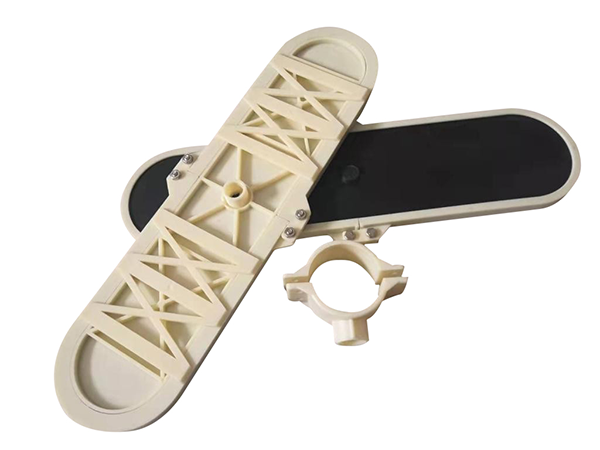
Aeration equipment is core equipment in wastewater treatment. Its working principle relies on micropore diffusion and gas-liquid mixing technology. It generates tiny air bubbles to expand the gas-liquid contact area, achieving efficient oxygenation and fluid mixing. The detailed working principles and key specifications are as follows:
I. Core Working Principle
1. Gas diffusion and bubble formation
Aerators split compressed air into numerous tiny bubbles (generally 0.1–3 mm in diameter) through internal microporous structures.
Tube aerator: Air flows into the rubber membrane tube via air guide grooves. The micropores (80–100 μm in aperture) on the membrane open under air pressure, releasing microbubbles with a diameter of 1–3 mm.
Single-hole membrane aerator: The elastic diaphragm bulges under air pressure, and the specially designed central orifice (0.5–2 mm in aperture) opens. Air ejects at high speed and breaks into fine bubbles in the water.
2. Oxygen transfer and mixing
As microbubbles rise in the wastewater, they make full contact with the water body. Oxygen diffuses into the water through the gas-liquid interface. Meanwhile, the agitation of bubbles drives water circulation, prevents sludge sedimentation, and distributes dissolved oxygen evenly.
II. Key Technical Details
1. Micropore structure and anti-clogging design
Diaphragm materials: EPDM rubber, silicone rubber and PU (polyurethane) are widely used. Featuring good elasticity, the micropores close automatically when air supply stops, preventing sewage backflow and sludge clogging.
Self-cleaning mechanism: Some aerators (such as dynamic aerators) adopt large-aperture two-way rotational mixing technology. The swirling flow causes collision and shearing between gas and liquid to realize mixed diffusion, which fundamentally avoids clogging.
2. Bubble size and oxygen utilization rate
The smaller the bubble diameter, the larger the gas-liquid contact area and the higher the oxygen utilization rate.
The oxygen utilization rate of microporous aerators can reach 18.4%–35%.
Cyclone aerators further refine bubbles through multi-layer spiral cutting to improve oxygen transfer efficiency.
3. Pressure and flow control
Aeration equipment shall operate under specified pressure to ensure uniform bubble release.
The air flow rate shall be adjusted according to process requirements. The recommended flow rate is 5–10 m³/h, and the critical flow rate is 12 m³/h (only allowed for short-time cleaning).