

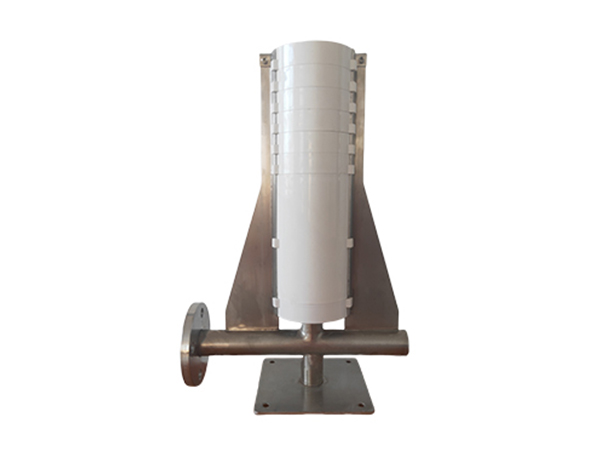
Wastewater treatment has always been one of the key topics in the field of environmental protection. With the rapid advancement of industrialization and urbanization, wastewater discharge volume keeps rising, posing severe threats to aquatic environments. Therefore, researching and developing high-efficiency wastewater treatment technologies is of great significance for environmental protection and ecological balance maintenance. As an innovative wastewater treatment device, swirl aerators have attracted extensive attention in recent years. This paper conducts an in-depth discussion and analysis on the performance of swirl aerators in wastewater treatment.
1. Elevate Dissolved Oxygen Concentration in Wastewater
Powerful water and air currents generated by the rotation of swirl aerators fully blend air with wastewater to form mixed liquid rich in dissolved oxygen. The liquid circulates and agitates repeatedly inside the swirl aerator, markedly boosting the dissolved oxygen level of wastewater. Higher dissolved oxygen accelerates the oxidation and decomposition of organic contaminants in wastewater, lifting overall wastewater treatment efficiency.
2. Remove Organic Pollutants from Wastewater
Organic matter in wastewater constitutes a primary source of water pollution. By raising dissolved oxygen levels, swirl aerators create favorable conditions for the oxidation and breakdown of organics. Under the function of swirl aerators, organic substances are thoroughly degraded, which reduces the Chemical Oxygen Demand (COD) and Biochemical Oxygen Demand (BOD) of wastewater and greatly improves water quality.
3. Eliminate Suspended Solids in Wastewater
Suspended solids in wastewater cover solid particles, colloids and other substances, which not only impair water transparency but also threaten aquatic organisms. Strong swirling water and air flow generated during operation fully agitate suspended solids, enabling them to bind with air bubbles and form scum. The scum gradually floats upward and accumulates at the top of the aerator, and is finally discharged via the slag removal unit, realizing effective separation of suspended solids from wastewater.
4. Reduce Nutrient Concentrations Such as Nitrogen and Phosphorus
Nutrients including nitrogen and phosphorus in wastewater are the leading trigger of water eutrophication. During treatment, swirl aerators increase dissolved oxygen and cut organic loads, providing ideal environments for the biological transformation of nitrogen, phosphorus and other nutrients. Driven by microorganisms, these nutrients are converted into harmless substances, lowering the eutrophication risk of discharged wastewater.
5. Boost Wastewater Treatment Efficiency
Thanks to its unique working principle and structural design, the swirl aerator delivers thorough mixing and agitation of wastewater throughout treatment, enhancing processing efficiency. Compared with conventional aeration systems, swirl aerators feature superior oxygen transfer efficiency and lower energy consumption, making wastewater treatment more cost-effective and high-performance.