

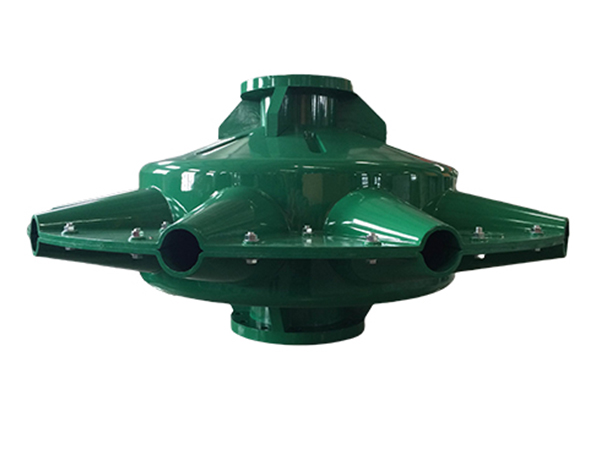
Typical faults of vortex aerators include uneven aeration, no bubbling in local areas and continuously low dissolved oxygen, as well as abnormal rise of air supply pressure. Most of these problems are caused by clogging and scaling, diaphragm damage, unbalanced air distribution in pipelines or insufficient air supply from the blower. Troubleshooting shall follow the sequence: inspect the air circuit first, then the equipment, and finally the process. Common faults and solutions are listed below:
1.Clogging or scaling of aeration heads
Sludge, algae or carbonate scale covers the surface of the aerator, reducing air output and resulting in enlarged or uneven bubbles. Remove and flush regularly with a high-pressure water gun. Biological sludge can be cleaned physically with brushes, while carbonate scale shall be removed by chemical methods. The cleaning cycle is generally 1–2 times per year.
2.Damaged or aged diaphragms
Cracking, falling-off or orifice defects of diaphragms lead to large local bubbles and dead zones. Air escapes through short-circuit channels, the effective aeration area shrinks, and dissolved oxygen cannot reach the target value. Drain the tank for inspection and replace the damaged diaphragms or the whole aerator unit.
3.Unbalanced air distribution in pipelines
Blocked branch pipes, mismatched pipe diameters, uneven air distribution in main headers and accumulated water inside pipelines will cause weak aeration over a large area. If a vortex aerator works normally under separate air supply but performs abnormally after reinstallation in the tank, the fault is generally located in the pipeline system. Check the opening of branch valves, drain accumulated water and optimize the air distribution layout.
4.Abnormal air supply system
1. Insufficient blower air volume, clogged intake filter, pipeline leakage, loose belts or faulty valves all result in inadequate air supply to the aeration tank. Check the pressure difference of the filter, apply soapy water along pipelines to locate leaks, confirm that valves are fully open, and record the changing trend of blower current and air pressure.
2.
5.Fault of dissolved oxygen probe
When the probe of the vortex aerator is covered by grease or biofilm, it will give falsely low readings and mislead process adjustment. Clean and calibrate the dissolved oxygen probe monthly to avoid misjudging the problem as a vortex aerator failure.