

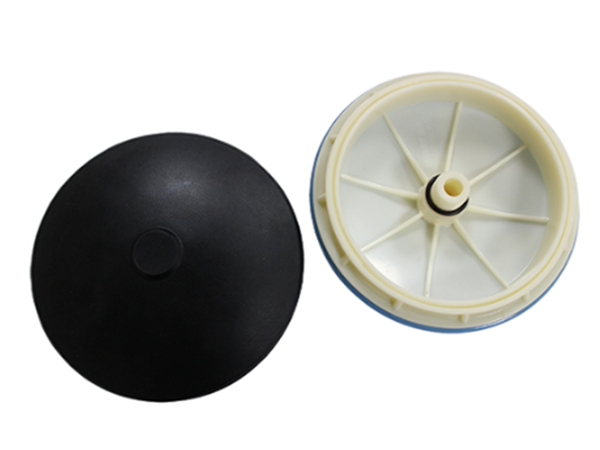
The working efficiency of vortex aerator is jointly affected by four categories of factors: equipment structure, operating parameters, working conditions and environment, as well as installation and maintenance. Deviation of any parameter from the reasonable range will directly reduce oxygen utilization rate and increase energy consumption.
1. Structural Design of the Equipment
Flow channel parameters of the vortex chamber: The angle of guide vanes, radius of chamber curvature and contraction ratio of outlet nozzles directly determine the vortex intensity. Improper parameters prevent stable high-speed vortex flow. Large air bubbles cannot be fully sheared into fine bubbles, the gas-liquid contact specific surface area decreases greatly, and the oxygen transfer efficiency drops sharply.
Smoothness of flow passages: If dead zones exist in the open large-channel structure, sludge and biofilm will easily accumulate and block passages after long-term operation. This increases air intake resistance, reduces actual aeration volume, and significantly deteriorates power efficiency.
Wear and corrosion resistance of materials: If wetted parts are made of ordinary non-wear-resistant materials, long-term scouring by hard particles in wastewater will deform the geometry of flow passages. The vortex shearing effect deteriorates rapidly, and equipment efficiency declines obviously with operating time.
2. Matching of Operating Parameters
Air inlet pressure and air flow rate: When air inlet pressure deviates from the designed range, the vortex speed fails to reach the rated value and bubble shearing performance weakens greatly. Excessive air flow easily causes massive bubble coalescence, while insufficient air flow leads to weak vortex intensity. Both conditions reduce oxygen utilization.
Adaptation to aeration water depth: Too shallow water shortens bubble residence time; oxygen escapes to the water surface before sufficient dissolution. Too deep water sharply increases air intake resistance and greatly raises blower energy consumption, which in turn reduces power efficiency.
Stability of operating load: Intermittent operation under long-term low load easily causes sludge and biofilm deposition on the aerator surface and gradually blocks flow passages. As a result, efficiency cannot return to the initial level even when the system resumes full-load operation.
3. Wastewater Working Conditions
Physicochemical properties of wastewater: High viscosity and surface tension of wastewater accelerate bubble rise and greatly increase bubble coalescence probability, shortening the effective gas-liquid contact time and significantly reducing oxygen transfer efficiency.
Concentration of sludge and impurities: High MLSS (mixed liquor suspended solids) increases the apparent viscosity of fluid and lowers energy transfer efficiency. The bubble size distribution becomes uncontrollable, directly weakening the shearing and refining effect of vortex aeration.
Influence of water temperature fluctuation: Rising water temperature reduces the saturated solubility of oxygen in water and decreases liquid viscosity, which speeds up bubble rise and cuts down total dissolved oxygen, indirectly lowering the overall efficiency of the aeration system.
4. Installation, Operation and Maintenance
Rationality of layout in the tank: Improper spacing between aerators leads to bubble merging and dead zones in the tank. Dissolved oxygen is insufficient in partial areas, aeration uniformity declines greatly, and the apparent working efficiency drops obviously.
Deviation of installation height: If the aerator is installed too high or too far from the tank bottom, the designed vortex flow field will be disrupted. Effective full-tank water circulation cannot be formed, resulting in short-circuit flow and local sludge accumulation, which directly affects overall aeration efficiency.
Long-term operation and maintenance status: Without regular cleaning of sludge and debris around aerators, flow passages get gradually blocked. Aeration resistance keeps rising, the proportion of invalid energy consumption of blowers increases, and the actual effective aeration efficiency continuously decays.