

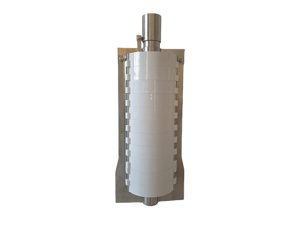
This process usually consists of multiple steps, each with its specific treatment technologies and equipment.
First, the initial step in industrial wastewater treatment is generally pretreatment. The main purpose of pretreatment is to remove large-particle impurities, suspended solids and part of the organic matter in the wastewater, so as to reduce the burden on subsequent treatment steps. This stage may include treatment units such as grids, screen filtration and regulating tanks. Grids and screen filtration can intercept large-particle impurities in the wastewater, while regulating tanks are used to adjust the flow rate and water quality of the wastewater, ensuring the stability of the subsequent treatment process.
Next comes the biological treatment stage. Biological treatment uses the metabolic effects of microorganisms to decompose organic matter in the wastewater and convert it into harmless substances. This stage usually includes two methods: aerobic treatment and anaerobic treatment. Aerobic treatment is carried out under aerobic conditions; aeration equipment provides sufficient oxygen to enable microorganisms to efficiently decompose organic matter. Anaerobic treatment is performed under anaerobic conditions and is suitable for treating high-concentration organic wastewater. Equipment that may be used in the biological treatment stage includes activated sludge reactors, biofilm reactors, etc.
After biological treatment, the wastewater may still require advanced treatment to further remove dissolved organic matter, inorganic salts, microorganisms and other substances. Advanced treatment technologies include coagulation and sedimentation, filtration, adsorption, membrane separation, etc. Coagulation and sedimentation works by adding coagulants into the wastewater to make suspended solids and colloidal particles aggregate into larger particles and settle. Filtration uses filter media (such as sand, activated carbon, etc.) to trap suspended solids and particles in the wastewater. Adsorption removes dissolved organic matter and inorganic salts from wastewater through the adsorption effect of adsorbents. Membrane separation is a high-efficiency separation technology that can separate substances in wastewater according to their molecular sizes.
Finally, the treated wastewater needs disinfection to kill pathogenic microorganisms, ensuring that the wastewater meets discharge standards or reuse requirements. Common disinfection methods include chlorination, ozone disinfection, ultraviolet disinfection, etc.
In the actual industrial wastewater treatment process, the process flow may be adjusted according to the characteristics of the wastewater and treatment requirements. For example, for wastewater containing heavy metal ions, additional treatment steps such as chemical precipitation or ion exchange may be required; for wastewater containing refractory organic matter, advanced treatment methods such as advanced oxidation processes may be adopted. Meanwhile, factors such as treatment cost, treatment efficiency and equipment footprint must also be considered in industrial wastewater treatment to select appropriate treatment processes and equipment.