

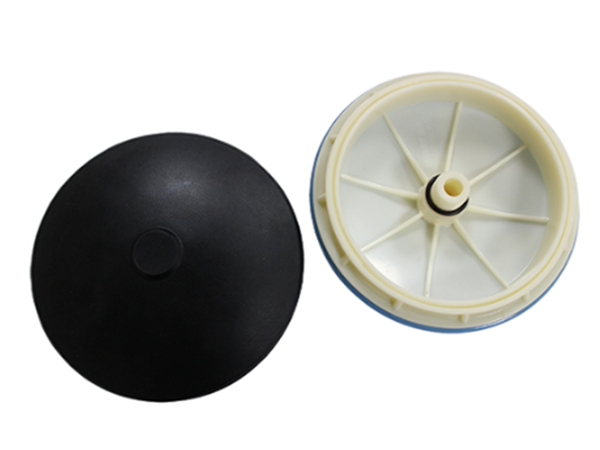
Disc Diffusers are key components in modern wastewater aeration systems, widely used in biological wastewater treatment plants. By dispersing air into fine and uniform bubbles, disc diffusers provide highly efficient oxygen transfer and effective mixing, ensuring stable biological treatment performance.
1. Structure and Working Principle
The high efficiency of fine bubble disc diffusers lies in their precision structural design and advanced microporous membrane technology.
Main Structure
Diffuser Body
Made of high-strength ABS engineering plastic, designed with a slightly domed surface to optimize bubble release and sludge shedding.
Microporous Membrane
Manufactured from high-quality EPDM rubber with anti-fouling surface treatment.
Micropores are CNC-perforated to ensure consistent pore size and precise airflow distribution.
Air Distribution Channels
Six internal air grooves inside the diffuser body guide incoming air through a built-in check valve to the center chamber, allowing the membrane to open easily under low resistance.
Mechanical Locking Assembly
A threaded anti-release locking structure ensures the membrane remains securely fixed during long-term operation.
Non-Return Valve
Installed at the diffuser base to prevent mixed liquor backflow into air pipelines when aeration stops, eliminating pipeline clogging risks.
Working Principle
Aeration Phase:
Air from the blower enters the diffuser, passes through internal air channels, inflates the EPDM membrane, and escapes through micropores as fine bubbles.
Air-Off Phase:
When air supply stops, the elastic membrane contracts instantly, closing the micropores. This self-sealing function prevents sludge intrusion and pore blockage.
Meanwhile, the built-in check valve stops wastewater from entering air pipes, ensuring clog-free intermittent aeration.
2. Key Performance and Technical Parameters
Typical Technical Specifications
| Parameter | Typical Range | Description |
| Diffuser Diameter | Φ215 mm / Φ260 mm / Φ270 mm / Φ300 mm | Dome or ball-cap designs available for enhanced anti-clogging |
| Service Area | 0.25 – 0.75 m²/unit (up to 0.5 – 2.0 m²/unit for high-performance models) | Depends on model, water depth, and airflow |
| Air Flow Rate | 1.5 – 3 m³/(unit·h) (up to 1 – 6 m³/(unit·h)) | Wide operating range for flexible loading |
| Oxygen Transfer Efficiency | 18.4% – 27.7% (tested at 3.2 m water depth) | Core indicator of aeration performance |
| Oxygen Transfer Power Efficiency | 4.46 – 5.19 kg O₂/kWh | Measures energy-saving performance |
| Pressure Loss | 1.77 – 2.75 kPa | Optimized air channels reduce resistance |
| Membrane Service Life | Over 10 years (EPDM) | Depends on water quality and operation conditions |
3. Core Advantages
High Oxygen Transfer & Energy Saving
Fine and uniform bubbles provide large gas–liquid contact area. Compared with coarse bubble or mechanical aerators, energy consumption can be reduced by 30%–50%.
Stable Operation & Anti-Clogging
Self-sealing membrane micropores and integrated check valve effectively prevent sludge backflow and pore blockage.
Easy Installation & Maintenance
Standard threaded connection allows quick installation and membrane replacement. Some models support retrofit projects without stopping plant operation.
Excellent Corrosion Resistance
EPDM membranes and ABS bodies resist municipal sewage and most industrial wastewater environments.
4. Installation, Operation & Maintenance
Installation Guidelines
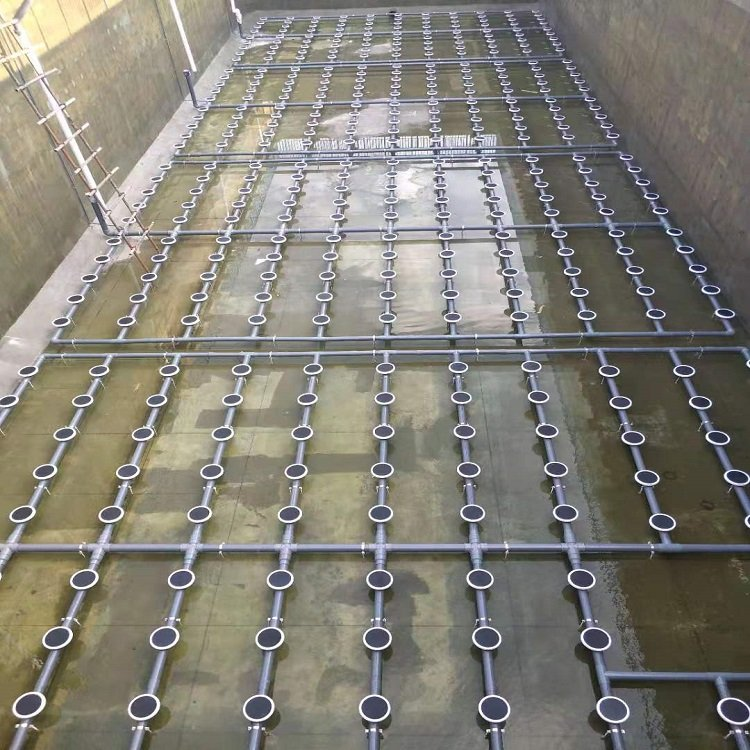
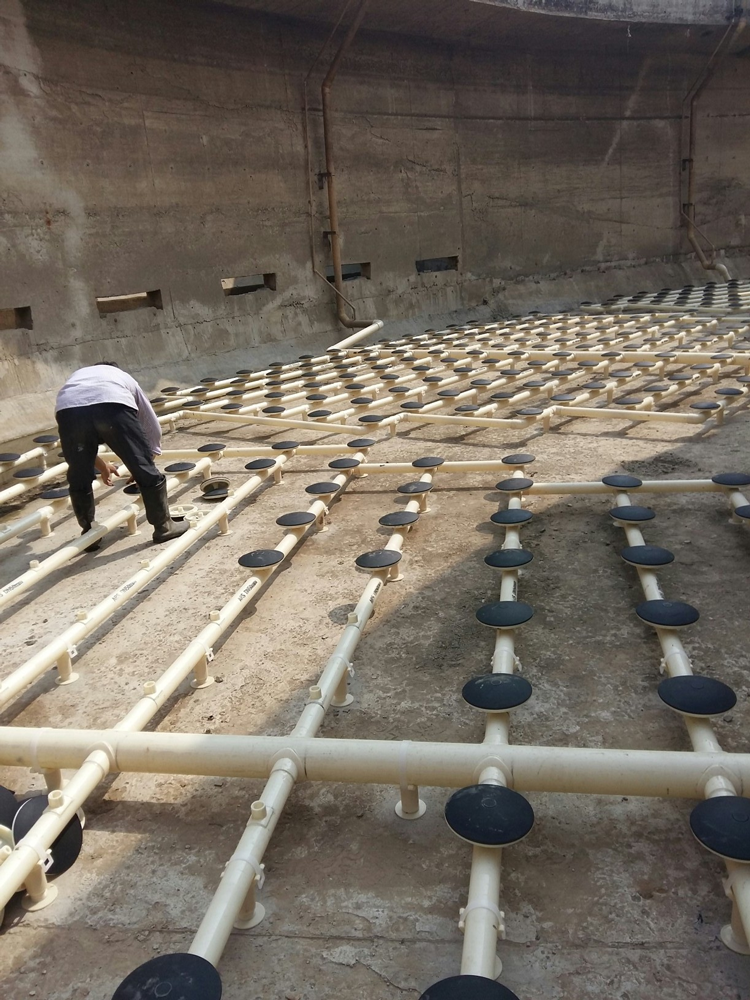
Air piping is usually arranged in loop networks with balancing valves for uniform air distribution.
Recommended airflow velocity:
Main pipes: 10–15 m/s
Branch pipes: ~5 m/s
Diffusers should be installed after all civil and welding works are completed, before tank filling, to avoid damage.
Typical installation height: 200–270 mm above tank floor.
After installation, clean-water leakage tests should be conducted to ensure airtight pipeline connections.
Operation & Maintenance
Daily Operation:
Monitor blower pressure. Abnormal pressure rise may indicate diffuser or pipeline clogging.
Routine Inspection:
Check bubble distribution uniformity. Local large bubbles or dead zones indicate maintenance needs.
Membrane Replacement:
Replace membranes when aging, damage, or continuous pressure increase occurs.
5. Application Fields
Disc Diffusers are widely used in:
Municipal Wastewater Treatment Plants
Aeration tanks and biological reactors.
Industrial Wastewater Treatment
Petrochemical, textile, paper, food processing, pharmaceutical, and chemical industries.
Aeration Tank Retrofit Projects
Modular design allows upgrading old high-energy aeration systems to improve treatment capacity and reduce operating costs.
Conclusion
Disc Diffusers are mature, efficient, and cost-effective fine bubble aeration devices.
They deliver stable oxygen transfer, reliable anti-clogging performance, and easy maintenance — making them an ideal choice for modern wastewater treatment aeration systems.