

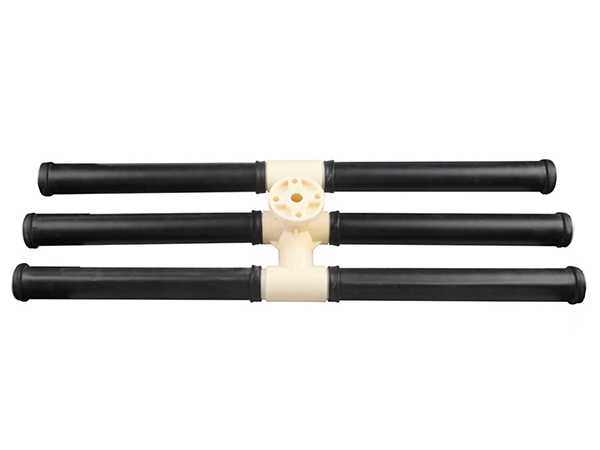
Tubular Diffusers are high-efficiency oxygen transfer devices widely used in municipal wastewater treatment and industrial wastewater treatment systems. Thanks to their excellent oxygen transfer efficiency, stable operation, and easy maintenance, tubular diffusers have become the mainstream solution for modern aeration tanks.
By releasing fine bubbles through microporous membranes, tubular diffusers greatly increase the gas–liquid contact area, ensuring highly efficient oxygen dissolution and superior biological treatment performance.
1. Structure and Working Principle
The high performance of tubular diffusers comes from their advanced structural design and intelligent self-closing membrane technology.
Main Components
Diffuser Membrane Tube
Manufactured from EPDM, Silicone (SI), or Polyurethane (PU).
Thousands of precisely arranged micropores (≈1.0–1.5 mm) generate fine bubbles of 1–3 mm diameter.
Support & Air Distribution Pipe
Made of UPVC or ABS.
Built-in air channels form a uniform annular air chamber to ensure even air release along the entire diffuser.
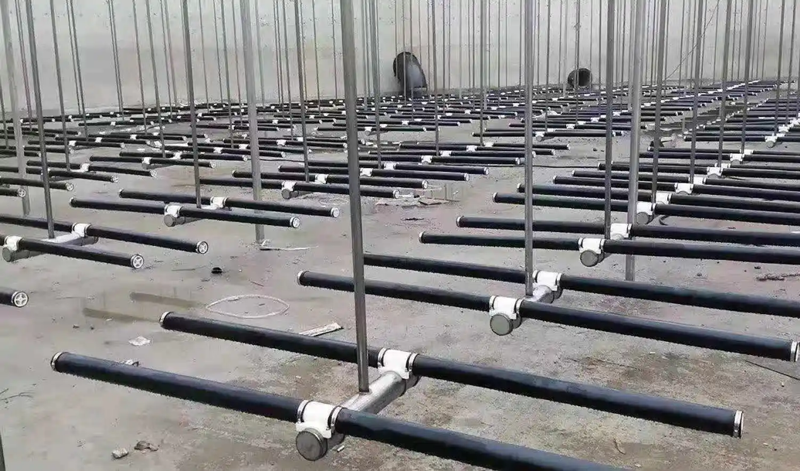
Fixing Accessories
AISI 304 stainless steel clamps and adjustable brackets secure the diffusers firmly to the tank floor.
Working Principle
Aeration Stage:
Air from the blower enters the air distribution pipe, forming an annular air chamber. The membrane tube expands under pressure, micropores open, and fine bubbles are uniformly released into the water.
Self-Closing Stage:
When air supply stops, the membrane contracts instantly. Micropores close automatically, preventing wastewater backflow and clogging.
This self-sealing design is the key to the long-term stable operation of tubular diffusers.
2. Key Performance Advantages
High Oxygen Transfer Efficiency
Fine and uniform bubbles provide a large gas–liquid interface. Oxygen utilization rate reaches 28%–42%, significantly higher than conventional aeration systems.
Energy Saving Operation
High oxygen transfer efficiency reduces blower energy consumption.
Power efficiency: 6.5–8.41 kg O₂/kWh, saving up to 30% energy compared with traditional disc diffusers.
Excellent Anti-Clogging Performance
Self-closing membrane prevents sludge intrusion and fouling.
Long Service Life
High-quality membranes offer resistance to acids, alkalis, oils, and aging.
Stable Aeration Performance
Uniform air distribution prevents deformation and ensures consistent oxygen delivery.
3. Typical Technical Parameters
| Parameter | Typical Range | Description |
| Diffuser Size | Ø65 / Ø69 mm, Length 350–1000 mm | Common lengths: 580 / 800 / 1000 mm |
| Bubble Diameter | 1 – 4 mm | Fine bubbles ensure high oxygen transfer |
| Air Flow Rate | 3 – 10 m³/(m·h) | Air volume per meter of diffuser per hour |
| Service Area | 0.5 – 2.0 m²/m | Effective aeration coverage per meter |
| Oxygen Utilization | 28% – 42% | Depends on water depth and quality |
| Pressure Loss | ≤ 3.5 kPa | Low resistance, reduces blower load |
4. Application Fields
Tubular Diffusers are widely applied in:
Municipal Wastewater Treatment Plants
Aeration tanks and biological reactors.
Industrial Wastewater Treatment
Petrochemical, textile, paper, food, pharmaceutical, and chemical industries.
Aeration System Upgrading Projects
Liftable modular design allows installation and maintenance without draining tanks or stopping operation, ideal for retrofitting old aeration systems.
5. Selection and Maintenance Guide
Material Selection
EPDM: Suitable for municipal sewage and most industrial wastewater.
Silicone (SI): Superior resistance to oil and special chemicals.
Installation
Bottom-mounted or liftable suspension installation.
Adjustable brackets ensure level positioning.
Expansion joints recommended for pipelines over 20 meters.
Maintenance
Membrane replacement requires only loosening stainless steel clamps.
No need to drain the tank or dismantle pipelines — minimizing downtime and maintenance costs.
Conclusion
With outstanding oxygen transfer efficiency, energy-saving performance, and anti-clogging reliability, Tubular Diffusers are the preferred solution for modern wastewater aeration systems.
Choosing high-quality tubular diffusers ensures stable treatment performance, lower operating costs, and long-term compliance with discharge standards.