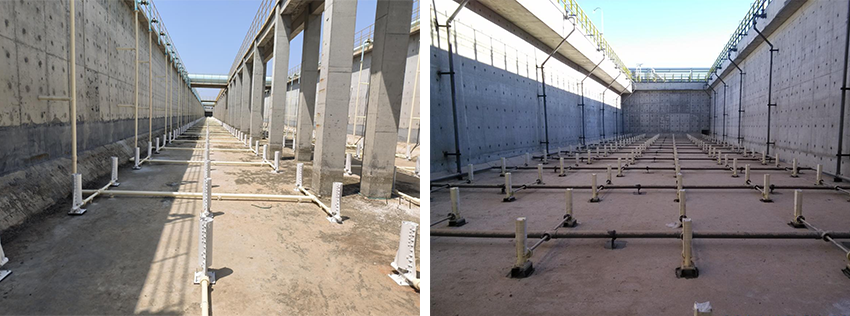
I. Role of Aeration in Wastewater Treatment
Aeration is one of the core processes in biological wastewater treatment. Its primary function is to continuously supply dissolved oxygen to wastewater, thereby sustaining the survival and metabolic activity of aerobic microorganisms. Through biological oxidation, these microorganisms decompose organic pollutants into carbon dioxide, water, and biomass, achieving effective removal of contaminants and purification of wastewater.
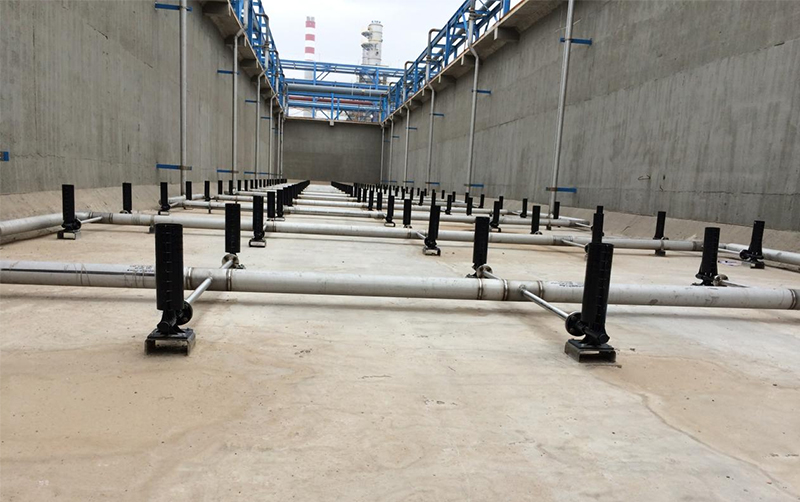
In high-strength industrial wastewater treatment, aeration systems must not only meet oxygen supply requirements, but also provide effective mixing, stable operation, and strong resistance to clogging and scaling. Under such demanding conditions, Vortex Aerators, also commonly referred to as Cyclone Aerators or Swirl Aerators, have become a highly reliable aeration solution.
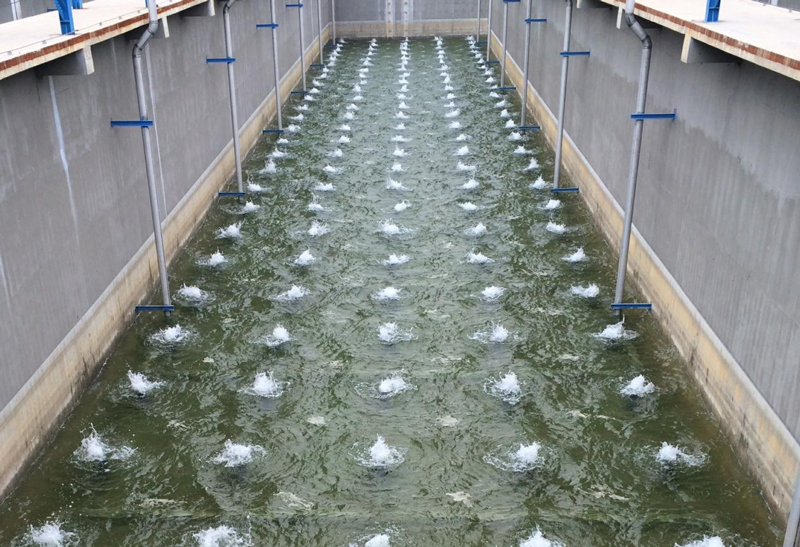
II. Working Principle and Technical Advantages of Vortex Aerators
A Vortex (Cyclone / Swirl) Aerator utilizes a specially designed internal structure to create a high-speed rotational flow between air and water. During this spiral motion, the gas–liquid contact time is significantly extended, thereby improving oxygen transfer efficiency and oxygen utilization.
Unlike conventional fine-bubble aeration systems, Vortex Aerators do not rely on micro-pores or membrane diffusers. This non-membrane design makes Cyclone Aerators far more adaptable to complex wastewater conditions, especially wastewater with high suspended solids, high hardness, and strong scaling tendencies.
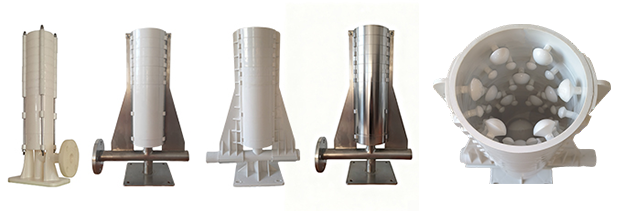
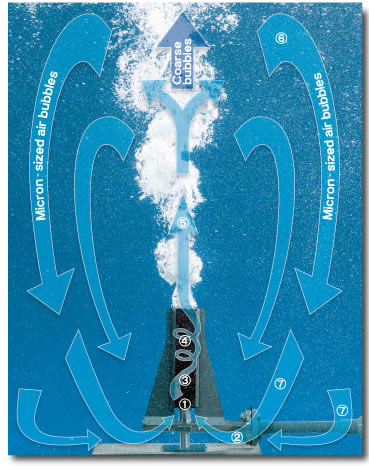
Working Principle (Based on Structural and Operating Diagrams):
Compressed air enters the aerator from the bottom;
A vacuum lifting effect is generated at the bottom, drawing in water at several times the volume of the incoming air;
Air and water are intensively mixed and move upward in a spiral flow;
The mushroom-shaped cutting head generates strong centrifugal force, further mixing air and water while breaking the air into fine bubbles;
The fully mixed air–water mixture is rapidly discharged upward, providing strong agitation;
Intense circulating flow forces part of the fine bubbles and water back to the tank bottom, allowing bottom sludge to participate in circulation;
The downward movement of fine bubbles increases their residence time in water, significantly improving dissolved oxygen transfer efficiency.
Key Technical Advantages:
High oxygen utilization, suitable for high oxygen demand loads
Non-micro-porous structure with excellent anti-clogging performance
Outstanding anti-scaling capability, ideal for high-hardness wastewater
Integrated aeration and mixing function, minimizing dead zones
Robust structure with long service life
Simple maintenance and stable, reliable operation
III. Applicable Wastewater Types
Vortex / Cyclone / Swirl Aerators are particularly suitable for high-pollution, high-load, and scale-prone industrial wastewater, including:
Pulp and paper wastewater
Fermentation industry wastewater (MSG, citric acid, yeast, etc.)
Coal chemical wastewater
Petrochemical and refinery wastewater
Chemical wastewater with high suspended solids
High-hardness industrial wastewater prone to scaling
Such wastewater is typically characterized by high COD concentration, high suspended solids content, elevated calcium and magnesium ion levels, and significant fluctuations in water quality, placing stringent demands on aeration equipment reliability.
IV. Structural Features of Vortex Aerators
1. Anti-Clogging Structural Design
Vortex Aerators adopt a large-flow-channel, non-membrane structure, effectively preventing blockage caused by fibers, sludge flocs, and crystalline deposits, making them suitable for long-term continuous operation.
2. Anti-Scaling Materials and Surface Treatment
Common materials include stainless steel and reinforced engineering plastics. Anti-corrosion and anti-scaling coatings can be selected according to wastewater characteristics to significantly extend service life.
3. High Oxygen Transfer Efficiency
By extending gas–liquid contact time through vortex flow, oxygen utilization efficiency typically reaches 18%–26%, meeting the requirements of high oxygen demand applications.
4. Strong Mixing Capability
The swirling flow field promotes effective circulation within the aeration tank, enhancing mass transfer efficiency and reducing aeration dead zones.
5. Easy Installation and Maintenance
With a compact structure and flexible installation options, Vortex (Cyclone / Swirl) Aerators are easy to inspect, clean, replace, and maintain, making them particularly suitable for plant retrofits and system upgrades.
V. Typical Application Scenarios
Aeration systems for aerobic tanks in industrial wastewater treatment plants
High-load biological treatment units
Aeration systems operating in scale-prone environments
Retrofit projects replacing frequently clogged aerators
Wastewater treatment facilities with limited maintenance access and long inspection intervals
Vortex Aerators demonstrate excellent reliability and adaptability in both new installations and retrofit projects.
VI. Design and Selection Considerations
When applying Vortex / Cyclone / Swirl Aerators in engineering projects, the following factors should be carefully considered:
Wastewater characteristics (COD, suspended solids, hardness, scaling tendency)
Actual oxygen demand and system load fluctuations
Aerator material selection and corrosion resistance grade
Aerator layout and spacing design
On-site inspection and maintenance conditions
For high-strength industrial wastewater, zoned operation and standby aeration units are recommended to ensure long-term stable system performance.
VII. Operation Management and Energy-Saving Recommendations
Integrate with online dissolved oxygen (DO) monitoring systems for dynamic aeration control
Avoid long-term over-aeration to reduce energy consumption
Periodically inspect aerator surfaces for scaling and clean when necessary
Combine with high-efficiency blowers to improve overall system energy efficiency
Conclusion
With their excellent resistance to clogging and scaling, as well as stable oxygen transfer performance, Vortex Aerators (also known as Cyclone Aerators or Swirl Aerators) offer clear advantages in treating high-strength, high-suspended-solids, and scale-prone wastewater.
Compared with traditional aeration methods, they are better suited for complex industrial wastewater conditions and applications with high operational reliability requirements. As industrial wastewater treatment standards continue to rise, Vortex / Cyclone / Swirl Aerators are increasingly becoming a reliable, efficient, and low-maintenance choice in modern industrial wastewater aeration systems.