

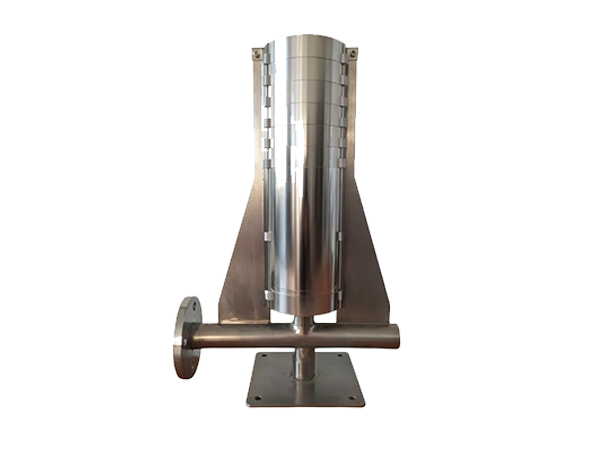
The wastewater aeration systems mainly consists of an air supply unit, a diffusion unit, transmission and distribution pipelines, and a control system. Its core function is to efficiently supply oxygen to sewage, promote microbial degradation of organic matter, achieve water mixing and stirring, and prevent sludge sedimentation simultaneously.
I. Structural Composition
Air Supply UnitComposed of blowers and air purifiers, this unit provides clean and stable air flow. Centrifugal blowers are widely adopted in large and medium-sized sewage treatment plants, with an air pressure ranging from 49 to 68.6 kPa.
Diffusion UnitInstalled at the tank bottom, it refines air into tiny bubbles to improve oxygen transfer efficiency. Common types are as follows:
Micro-pore Aerator: Made of sintered ceramsite or rubber membrane, it generates 0.1–0.2 mm bubbles with an oxygen utilization rate of 20%–25%.
Dynamic Aerator: It adopts large-hole bidirectional swirling mixing technology to prolong bubble retention time and alleviate clogging issues.
Tube Aerator: Suitable for plug-flow aeration tanks. Made of ABS/UPVC material with elastic diaphragms, it features aeration hole spacing of 200–300 mm.
Pipeline Transmission and Distribution SystemMade of UPVC material, the system is designed with a main pipeline flow velocity of 4–6 m/s and a branch pipeline flow velocity of 10–15 m/s. The pressure drop is controlled at 0.3–0.5 kPa per meter to ensure uniform air distribution.
Control and Support StructureIt comprises an intelligent control system, vertical reducers, floating supports and other components, facilitating operational optimization and routine maintenance. For instance, liftable micro-pore aerators enable maintenance without shutting down water supply.
II. Core Functions
OxygenationIt supplies oxygen to aerobic microorganisms to sustain their metabolic activities and accelerate the oxidative decomposition of organic matter. This is a critical procedure for biological treatment processes including the activated sludge process.
Mixing and StirringRising bubbles drive water circulation, enabling sufficient contact among sewage, sludge and microorganisms to enhance mass transfer efficiency and prevent sedimentation of suspended solids.
Harmful Gas RemovalVia gas-liquid exchange, volatile harmful gases such as hydrogen sulfide and carbon dioxide dissolved in water are released into the atmosphere, thereby improving water quality.
Energy Saving and Intelligent OptimizationUpgraded systems adopt laser-drilled membranes, flow field optimization with deflectors and stainless steel materials to extend service life. Combined with intelligent regulation, the overall energy consumption can be reduced by 12%–18%.