

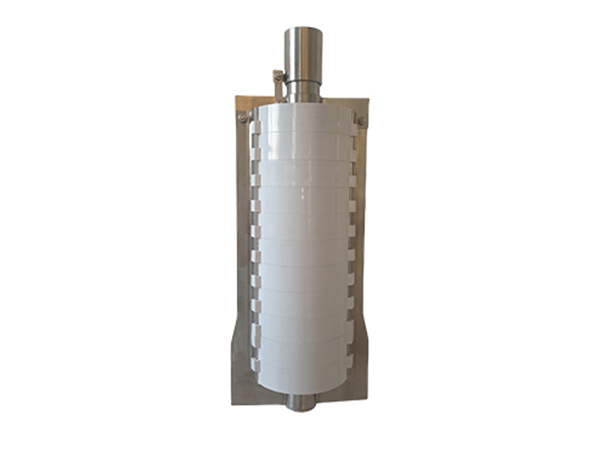
Cleaning methods for fine bubble diffuser fall into three categories: online non-dismantling cleaning, physical mechanical cleaning and chemical soaking. Methods can be flexibly selected according to clogging severity and working conditions, so as to quickly restore aeration efficiency, prevent damage to membranes caused by excessive cleaning and greatly extend service life of equipment.
1. Online Non-dismantling Cleaning
Formic acid air flow cleaning: No need to drain the tank water. Inject 85% formic acid into the air pipeline via a metering pump, with approximately 100 cm³ injected for each aerator in a single operation. Maintain maximum air flow throughout the process. Keep aeration flushing for 2 hours after dosing. Conduct this operation twice a year to efficiently dissolve calcium carbonate scale.
High-pressure air back-blowing: Connect a portable air compressor with pressure of 0.8–1 MPa, and perform reverse purging from the air inlet of the aerator to flush out sludge particles trapped inside micropores. No equipment dismantling required. One operator can finish cleaning the whole tank within 1–2 hours.
Combined air-water online flushing: Turn on compressed air and pressurized water simultaneously for reverse jetting from the bottom of aeration discs, which rapidly removes biological slime attached to membrane surfaces. Suitable for monthly routine preventive maintenance.
2. Physical Mechanical Cleaning
High-pressure water jet flushing: After draining the aeration tank, use a high-pressure water gun with pressure ≤0.2 MPa to rinse membranes. Keep the water gun at least 50 cm away from membranes to prevent high-pressure water from puncturing rubber membranes and wash off sticky sediments on the surface.
Manual scrubbing with soft brushes: Gently wipe membrane surfaces with soft nylon brushes together with low-pressure clean water to thoroughly remove stubborn biological sludge. Hard tools such as steel wire brushes are strictly prohibited to avoid scratching micropores and resulting in uneven aeration.
Dismantled offline deep cleaning: Remove heavily clogged aerators as a whole and take them out of the tank for one-by-one rinsing. Fully clean deposited sludge inside aeration disc bases and air vents. Suitable for centralized operation during annual overhaul.
3. Chemical Soaking Cleaning
Dilute hydrochloric acid soaking: Prepare 2%–5% dilute hydrochloric acid solution and fully submerge aerators for 12 hours to fully dissolve calcium and magnesium inorganic scale. Take out the aerators and rinse repeatedly with clean water before reinstallation.
Targeted chemical cleaning: For special clogging such as iron sulfide deposits, soak aerators with dedicated chelating scale removers to eliminate stubborn sediments that cannot be dissolved by ordinary acid washing. Thorough rinsing is required after cleaning to prevent chemical residue from affecting the activity of bacterial flora in the biochemical system.
Before cleaning, verify the acid and alkali resistance limit of the microporous aerator membrane material. Strongly corrosive chemicals are forbidden to prevent membrane swelling, aging and cracking.
All pipelines and fittings used for acid washing must be acid-resistant to avoid corrosion and leakage of ordinary metal components.
If aeration volume shows no obvious improvement after cleaning, the membrane is most likely aged and hardened. Repeated cleaning is unnecessary; directly replace the membrane assembly.