

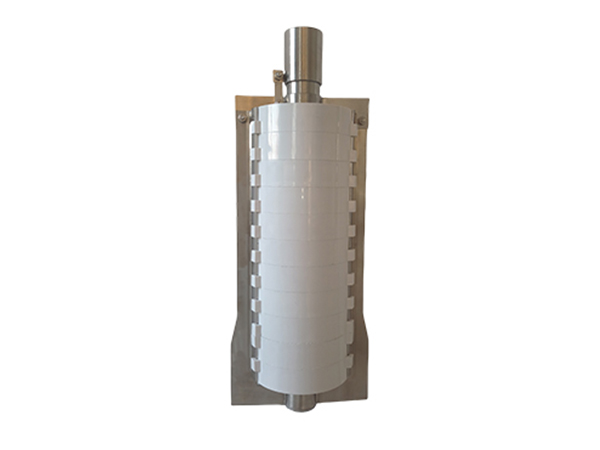
The use of swirl aerators requires satisfaction of conditions such as environmental compatibility, installation standards, operational parameters, and maintenance management. Considering their structural characteristics, the specific requirements are as follows:
1. Environment and basic conditions
Water quality and application scenarios
Applicable water quality: The swirl aerator is particularly suitable for high suspended solids, high hardness, and easily scaling wastewaters such as municipal sewage, printing and dyeing wastewater, chemical wastewater, and coal chemical wastewater. It exhibits significant advantages in the treatment of high-concentration wastewater and can replace traditional microporous aerators.
Environmental restrictions: Avoid using in strong acid or strong alkali environments. The installation environment should be well-ventilated and kept away from flammable and explosive sources.
Requirements for pool body and foundation
The water depth of the aeration tank should be 4-8 meters, with a flatness error of the tank bottom not exceeding 5mm per meter. No fixed installation of the tank bottom is required, but it is necessary to ensure that the aeration pipeline is stable, and the connection between the pipeline and the aerator is sealed without air leakage.
II. Installation and Gas Distribution Specifications
Installation location and spacing
Layout density: Each service area covers 4-12 square meters, adjustable according to gas supply volume and pool shape.
Installation method: The design allows for online installation through a lift-up mechanism, eliminating the need for water shutoff and production downtime during renovation projects. During installation, first secure the gas distribution pipeline, and then screw in the aerator.
Pipe and system adaptation
The aeration pipeline is arranged in a circular or branching pattern, with the pipe diameter matching the aeration volume. A blow-off valve is installed at the end of the pipeline (for regular discharge of condensate water). A check valve is required when connecting to the fan (to prevent backflow of pool water). The selection of the fan must meet the pressure loss requirements of the aerator.
III. Operating Parameters and Performance Requirements
Ventilation rate and oxygen utilization rate
Ventilation volume: The ventilation volume for a single set is 0.4-0.9 m³/m·h, which needs to be matched with the fan air volume to avoid equipment overload caused by excessive air supply.
Oxygen utilization rate: By forming microbubbles through multi-layer cutting, the oxygen utilization rate can reach 24%, with stable dissolved oxygen (DO) values, capable of maintaining the suspended state of activated sludge.
Mixing and anti-clogging performance
The ascending cyclone has strong stirring force, which can prevent silt accumulation at the bottom of the tank and is suitable for high-concentration wastewater. Its structure has no moving parts and features a large-flow air circulation design, ensuring no blockage.
IV. Maintenance and Safety Management
Routine maintenance requirements
Regular inspection: Check the air distribution pipeline for air leaks (using soap water to test the connection) monthly, clean the biofilm attached to the surface of the aerator quarterly, and clean the fan filter once a week.
Troubleshooting: When the swirl aerator exhibits uneven aeration, inspect the pipeline for blockages or any deviation in the installation angle of the aerator. If oxygen utilization rate decreases, check whether the fan pressure meets the required standard or replace any aging seals.
Safety and longevity guarantee
The material is made of nylon + fiberglass or nano-scale new materials, which are resistant to aging and corrosion, with a service life of 10-20 years; power must be cut off during installation, and protective equipment must be worn during diving operations.
V. Regional and climatic adaptability
Winter protection: During low temperature seasons (<5℃), it is necessary to ensure stable aeration volume (to prevent pipes from freezing). The outlet temperature of the fan can be appropriately increased (by preheating the air);
Moisture prevention during rainy season: The motor of the swirl aerator equipment needs to be well waterproofed (with an IP66 protection level), and the control cabinet should be equipped with a dehumidification device (to prevent electrical components from being affected by moisture and short-circuited).